Rimsky-Korsakov’s Trombone Concerto: A Comprehensive Overview
Rimsky-Korsakov’s 1877 trombone concerto, originally for military band, is a cornerstone of the repertoire, with readily available PDF scores from IMSLP and other sources;
Historical Context & Composition
Nikolai Rimsky-Korsakov composed his Concerto for Trombone in 1877, a period marked by the flourishing of Romantic orchestral music. Interestingly, the work wasn’t initially conceived for the standard orchestral setting; it was specifically written for the trombone and a military band. This unique origin reflects the composer’s connection to military music and his innovative approach to instrumentation.
The impetus for the concerto came from a request by the Imperial Russian Army for new band repertoire. Rimsky-Korsakov, already a seasoned composer, embraced the challenge, creating a piece that showcased the trombone’s lyrical and virtuosic capabilities. Today, finding a PDF version of the score is quite accessible through resources like the International Music Score Library Project (IMSLP), allowing musicians worldwide to study and perform this significant work. The concerto stands as a testament to the composer’s skill and enduring legacy.
The Composer: Nikolai Rimsky-Korsakov
Nikolai Andreyevich Rimsky-Korsakov (1844-1908) was a pivotal figure in Russian music, renowned as a composer, orchestrator, and teacher. A member of “The Five,” he championed a distinctly Russian national style, blending it with Western compositional techniques. His mastery of orchestration is legendary, influencing generations of composers.
While celebrated for operas like The Snow Maiden and Scheherazade, his Concerto for Trombone demonstrates his versatility. He wasn’t a trombone player himself, yet he understood the instrument’s potential, crafting a work that’s both challenging and expressive. Accessing a PDF of the score, readily available on platforms like IMSLP, reveals his meticulous attention to detail and harmonic richness. His contributions solidified his place as a cornerstone of the Romantic era.
Original Instrumentation: Military Band
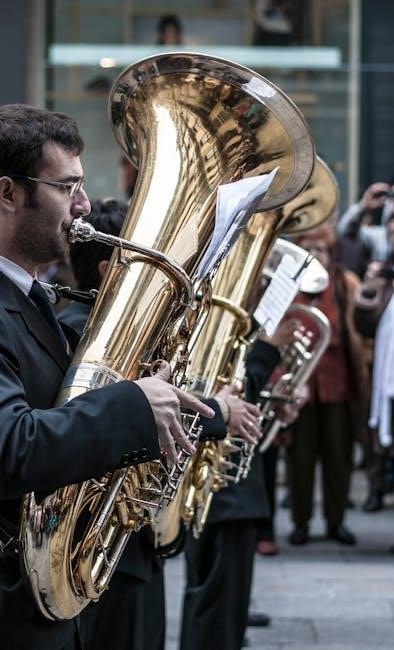
Rimsky-Korsakov initially conceived the Concerto for Trombone in 1877 for the unique sonic palette of a Russian military band. This instrumentation—featuring a broad array of woodwinds, brass, and percussion—shaped the concerto’s vibrant character and demanding technical requirements. The composer skillfully exploited the band’s capabilities, creating a colorful and dynamic backdrop for the solo trombone.
While arrangements for orchestra and trombone with piano exist, the original military band version remains significant. Finding a PDF score allows examination of Rimsky-Korsakov’s specific voicing and textural choices. The band’s inherent power and brilliance influenced the concerto’s overall dramatic arc, making it a standout piece in both band and trombone repertoire.
Date of Composition: 1877
Nikolai Rimsky-Korsakov completed his Concerto for Trombone in 1877, a period of significant creative output for the composer. This date places the work firmly within the Romantic era, influencing its melodic richness and expressive depth. The composition arose from a commission and a desire to showcase the trombone’s capabilities within a larger ensemble.
Accessing a PDF of the original score reveals insights into the compositional style of the time. The year 1877 is crucial for understanding the context of the piece, as it reflects Rimsky-Korsakov’s evolving orchestration techniques. Numerous online resources, including IMSLP, offer digitized versions, allowing modern musicians to study and perform this landmark trombone work.
Musical Structure & Movements
Rimsky-Korsakov’s trombone concerto features three distinct movements: Allegro Vivace, Andante Cantabile, and Allegro-Allegretto, all available in PDF format.
Movement I: Allegro Vivace ⸺ Form and Characteristics
The Allegro Vivace, the opening movement of Rimsky-Korsakov’s Trombone Concerto, is a vibrant and technically demanding showcase for the soloist. Often described as energetic and brilliant, this movement establishes the concerto’s overall character.
PDF scores readily available online reveal a structure characterized by rapid passages, intricate ornamentation, and a generally lively tempo. The form is typically sonata form, presenting contrasting themes and developing them throughout the movement. Trombonists encounter challenges in navigating the quick articulation and maintaining clarity at high speeds.
The movement’s melodic material is distinctly Russian in flavor, showcasing Rimsky-Korsakov’s characteristic harmonic language. Accessing the PDF allows performers to study the detailed phrasing and dynamic markings crucial for an effective interpretation. It’s a thrilling opening that immediately captivates the listener.
Movement II: Andante Cantabile ー Lyrical Expression
The Andante Cantabile, the second movement of Rimsky-Korsakov’s Trombone Concerto, offers a striking contrast to the energetic first movement. This section is celebrated for its lyrical beauty and expressive melodic lines, providing a platform for the trombonist to demonstrate their tonal control and phrasing abilities.
PDF scores reveal a movement focused on sustained notes and legato passages, demanding a rich and resonant sound from the performer. The harmonic language is lush and romantic, creating a deeply emotive atmosphere.
Studying the PDF allows careful attention to the nuanced dynamic markings and subtle tempo variations, essential for conveying the movement’s inherent tenderness. It’s a moment of introspection and beauty, showcasing the trombone’s capacity for lyrical expression, a true highlight of the concerto.
Movement III: Allegro-Allegretto ⸺ March Style & Finale
The final movement, Allegro-Allegretto, bursts forth with a vibrant energy, adopting a distinct march style that provides a rousing conclusion to Rimsky-Korsakov’s Trombone Concerto. PDF scores clearly illustrate the brisk tempo and rhythmic drive characteristic of this section.
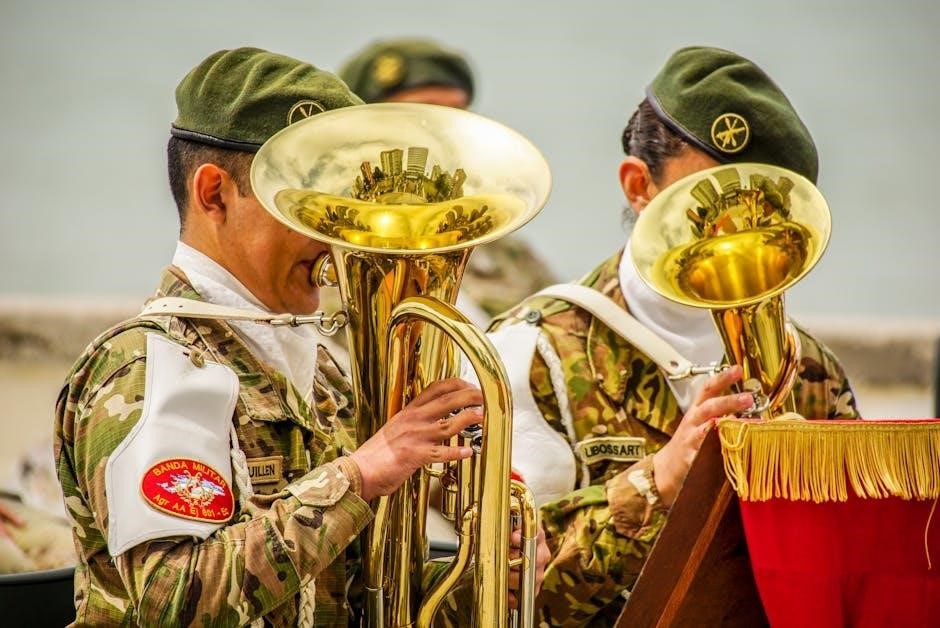
This movement demands technical agility from the trombonist, featuring rapid passages and precise articulation. The military band origins are evident in the bold brass fanfares and percussive elements. Analyzing the PDF reveals intricate interplay between the soloist and the ensemble.
Despite its energetic character, the finale also incorporates lyrical moments, showcasing the trombone’s versatility. The PDF allows performers to fully grasp the dynamic contrasts and phrasing nuances, culminating in a brilliant and satisfying close to the concerto.
Technical Aspects for Trombone Performance
PDF scores reveal demanding range and endurance, requiring skillful articulation and stylistic nuance from the trombonist to master Rimsky-Korsakov’s challenging solo part.
Range and Endurance Requirements
Rimsky-Korsakov’s Trombone Concerto presents significant technical hurdles for performers, notably in its expansive range and substantial endurance demands. Accessing PDF scores readily available online through platforms like IMSLP confirms the concerto frequently explores the extreme registers of the instrument.
Players must confidently navigate both the low pedal tones and the high harmonic series, demanding exceptional breath control and embouchure flexibility. The sustained lyrical passages, particularly within the Andante Cantabile movement, necessitate prolonged airflow and consistent tone production. Furthermore, the brisk tempos and virtuosic flourishes in movements like the Allegro Vivace require stamina to maintain clarity and precision throughout the entire work. Successful performance hinges on a trombonist’s ability to balance technical proficiency with musical expression, as evidenced by studying the full score in PDF format.
Articulation and Style Considerations
Performing Rimsky-Korsakov’s Trombone Concerto requires careful attention to articulation and stylistic nuance, elements clearly visible when studying a PDF score obtained from resources like IMSLP. The concerto, rooted in the Romantic era, demands a lyrical and expressive approach, contrasting with the often-brash character associated with the trombone.
Players should prioritize legato phrasing and smooth transitions, particularly in the Andante Cantabile. However, the Allegro Vivace and Allegro-Allegretto movements call for crisp, defined articulation to highlight the rhythmic vitality. The original instrumentation for military band influences the stylistic expectations, suggesting a bold and resonant tone. Examining the full score in PDF reveals dynamic markings and phrasing indications crucial for conveying the composer’s intent, balancing Russian melodic sensibilities with Western concert traditions.
Challenges in the Solo Part
The Rimsky-Korsakov Trombone Concerto presents significant challenges for performers, readily apparent when studying a PDF of the score – easily accessible via IMSLP and similar platforms. Beyond considerable range demands, the solo part requires exceptional endurance due to its length and technical complexity. Rapid passages and demanding leaps necessitate precise technique and breath control.
Furthermore, maintaining a consistent tone quality across the instrument’s entire range is crucial. The concerto’s lyrical sections demand expressive phrasing and nuanced dynamics, while the virtuosic passages require clarity and rhythmic precision. Successfully navigating these challenges requires a thorough understanding of the score, as revealed in the PDF, and dedicated practice to overcome the technical hurdles inherent in this iconic work.
Availability of Sheet Music & Scores
PDF scores of Rimsky-Korsakov’s Trombone Concerto are widely available online, notably through IMSLP, Musicnotes, and Sheet Music Plus, offering convenient access.
PDF Availability: IMSLP and Other Sources
Nikolai Rimsky-Korsakov’s Trombone Concerto enjoys excellent accessibility thanks to numerous online resources offering PDF scores. The International Music Score Library Project (IMSLP), also known as the Petrucci Music Library, stands out as a premier destination, providing free, legal access to a wealth of public domain sheet music, including various editions of the concerto.
Beyond IMSLP, commercial platforms like Musicnotes and Sheet Music Plus also feature high-quality PDF versions available for purchase. These often include meticulously prepared scores and, in some cases, accompanying audio files for study. The availability extends to arrangements for trombone and piano, catering to performers without access to a full military band.
Users can readily download the trombone solo part and piano accompaniment, facilitating practice and performance. These digital resources democratize access to this significant work, enabling musicians worldwide to engage with Rimsky-Korsakov’s captivating composition.
Scores for Trombone and Piano Arrangement
Recognizing the practical need for performance beyond a full military band setting, arrangements of Rimsky-Korsakov’s Trombone Concerto for trombone and piano are widely available in PDF format; These arrangements maintain the core musicality of the original while adapting it for a more accessible ensemble.
IMSLP frequently hosts these piano reduction scores, alongside commercial vendors like Musicnotes and Sheet Music Plus, offering both free and purchasable options. These versions are invaluable for soloists preparing for auditions, recitals, or simply for personal study. The piano accompaniment faithfully supports the trombone line, capturing the concerto’s harmonic richness and melodic contours.
These arrangements are often meticulously crafted, providing a balanced and satisfying musical experience for both performers. Finding a suitable PDF version ensures convenient access and allows trombonists to explore this masterpiece regardless of ensemble availability.
Scores for Trombone and Military Band
The original 1877 score of Rimsky-Korsakov’s Trombone Concerto is written for solo trombone and military band, and finding a complete, accurate PDF of this version is a priority for many conductors and ensembles. The International Music Score Library Project (IMSLP) is a primary resource, often hosting digitized versions of the full orchestral score.
However, due to the complexity of a military band arrangement, these PDFs can be extensive and may require significant download time. Commercial sheet music retailers also offer professionally prepared scores, ensuring clarity and accuracy. These scores are essential for authentic performances, showcasing the concerto’s vibrant orchestration and dynamic interplay between soloist and ensemble.
Access to the full band score allows for a deeper understanding of Rimsky-Korsakov’s compositional intent and provides a truly immersive musical experience.
Arrangements and Adaptations
Rimsky-Korsakov’s concerto sees adaptations for various instruments, including piano accompaniment versions readily available as PDF downloads for practice and study.
Arrangements for Different Instruments
Nikolai Rimsky-Korsakov’s Trombone Concerto, while originally conceived for trombone and military band, has inspired numerous arrangements catering to diverse instrumental configurations. Recognizing the concerto’s melodic richness and technical demands, composers and arrangers have successfully adapted the work for instruments beyond the trombone.
Notably, arrangements exist for instruments like the flute, guitar, and piano, allowing musicians to explore the concerto’s themes and challenges on their respective instruments. These adaptations often involve transposing the solo part to suit the instrument’s range and characteristics, while retaining the core harmonic and melodic structure of Rimsky-Korsakov’s original composition.
Many of these arrangements are available as PDF files through online resources such as IMSLP (International Music Score Library Project), providing accessible options for performers and educators. These arrangements broaden the concerto’s accessibility and allow a wider audience to appreciate its musical brilliance.
Piano Accompaniment Versions
Recognizing the logistical challenges of performing with a full military band, piano accompaniment versions of Rimsky-Korsakov’s Trombone Concerto have become incredibly popular and widely utilized. These arrangements provide a practical alternative for rehearsals, auditions, and performances where a band is unavailable. The piano reduction faithfully captures the harmonic and melodic essence of the original orchestral score, offering a substantial and satisfying musical experience.
Numerous high-quality scores for trombone and piano are readily accessible as PDF downloads from platforms like Musicnotes, Sheet Music Plus, and, crucially, IMSLP. These scores cater to varying skill levels, from student arrangements to fully realized concert versions.
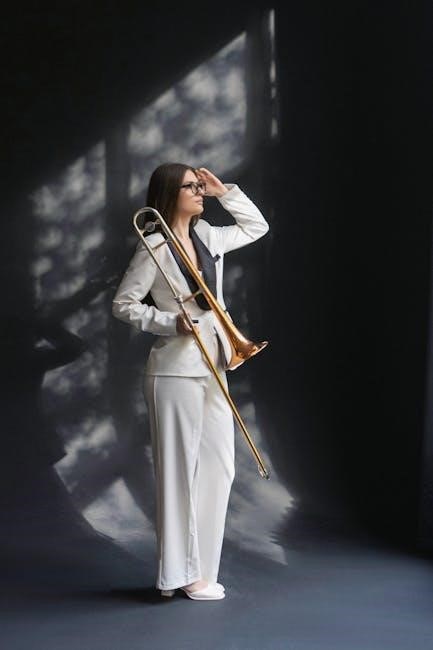
The availability of these piano accompaniments significantly expands the concerto’s accessibility, allowing trombonists to engage with this masterpiece in a more convenient and affordable manner.
Adaptations for Various Skill Levels
While Rimsky-Korsakov’s Trombone Concerto presents a significant technical challenge, adaptations exist to accommodate players of differing abilities. Recognizing the concerto’s inherent difficulty, arrangers have created simplified versions, often available as PDF downloads, focusing on core melodic and harmonic material. These adaptations typically reduce the range requirements and streamline complex passages, making the piece approachable for intermediate and advanced students.
IMSLP and other online music repositories often host these modified scores, alongside the original full version. These arrangements prioritize musicality over sheer technical display, allowing developing trombonists to experience the concerto’s beauty without being overwhelmed.

Furthermore, some editions offer optional cadenzas or simplified ornamentation, providing customizable performance options.

The Concerto’s Place in the Repertoire
Rimsky-Korsakov’s concerto is a vital work in trombone literature, influencing composers and remaining popular, with accessible PDF scores readily available online today.
Significance in Trombone Literature
Rimsky-Korsakov’s Trombone Concerto holds immense significance within the trombone repertoire, standing as one of the instrument’s most celebrated and frequently performed works. Composed in 1877 for trombone and military band, it uniquely showcases the instrument’s melodic capabilities and technical demands. Before this concerto, substantial solo works for trombone were relatively scarce, making Rimsky-Korsakov’s contribution particularly groundbreaking.
The concerto’s enduring popularity is bolstered by the widespread availability of scores, particularly in PDF format through resources like the International Music Score Library Project (IMSLP). This accessibility allows trombonists of all levels to engage with the piece, study its intricacies, and incorporate it into their performance practice. The concerto’s three movements – Allegro Vivace, Andante Cantabile, and Allegro-Allegretto – provide a comprehensive display of the trombone’s expressive range, from virtuosic brilliance to lyrical beauty.
Its influence extends beyond performance, serving as a cornerstone of trombone pedagogy and inspiring generations of trombonists and composers alike.
Influence on Subsequent Composers
Rimsky-Korsakov’s Trombone Concerto, readily available in PDF format via platforms like IMSLP, profoundly impacted composers who followed, expanding the perceived possibilities of the trombone as a solo instrument. Prior to 1877, the trombone was often relegated to supporting roles; Rimsky-Korsakov’s work demonstrated its potential for melodic expression and virtuosic display.
While direct imitations are rare, the concerto’s influence can be observed in a shift towards greater recognition of the trombone’s soloistic capabilities. Composers began to explore more challenging and expressive writing for the instrument, inspired by the concerto’s blend of Russian melodicism and Western harmonic structures. The concerto’s success encouraged others to write for the trombone with a newfound appreciation for its unique timbre and range.
It paved the way for a richer and more diverse trombone repertoire, fostering a legacy that continues to inspire composers today.
Performance History and Notable Recordings
Initially conceived for military band, performances of Rimsky-Korsakov’s Trombone Concerto – easily accessible as a PDF from sources like IMSLP – were infrequent for decades following its 1877 composition. Early performances were largely confined to Russian military bands. However, the 20th century witnessed a growing interest, spurred by the increasing prominence of the trombone in orchestral and solo settings.
Notable recordings showcase the concerto’s evolving interpretation. Performers like Joseph Alessi and Christian Lindberg have produced critically acclaimed versions, highlighting both the technical demands and lyrical beauty of the work. These recordings demonstrate the concerto’s adaptability to both traditional band arrangements and orchestral transcriptions.
Contemporary performances continue to celebrate this landmark piece, ensuring its enduring presence in the trombone repertoire.